Getting an Online Course in Australia for Your Career
September 3, 2025


If you’re planning to work in a pub, bar, restaurant, bottle shop, club or other licensed venue in Australia, you’ll need a Responsible Service of Alcohol (RSA) certificate before you can legally sell or serve alcohol.
RSA certificate requirements vary across Australia depending on the state or territory where you intend to work. While every hospitality worker needs Responsible Service of Alcohol (RSA) training before serving alcohol, some states also require competency cards, refresher training or additional approvals.
This guide explains the general RSA certificate requirements in Australia, highlights the differences between each state and territory, and outlines what you should check before enrolling in a course.
An RSA (Responsible Service of Alcohol) certificate demonstrates that you’ve successfully completed training in the responsible sale, service and supply of alcohol. The nationally recognised training is based on the unit SITHFAB021 Provide Responsible Service of Alcohol, which forms the basis of RSA training throughout Australia.
During the course, you’ll learn how to recognise the signs of intoxication, check acceptable forms of identification, refuse service when required by law, understand your legal responsibilities and help minimise alcohol-related harm. The training also covers strategies for dealing with difficult situations professionally and maintaining a safe environment for customers, colleagues and the wider community.
Once you successfully complete the course, you’ll receive a nationally recognised Statement of Attainment. However, some states also require workers to obtain an additional competency card or complete other administrative steps before they can begin serving alcohol.

In most Australian states and territories, anyone who sells, serves or supplies alcohol in a licensed venue is required to hold a valid RSA qualification. This requirement generally applies to bartenders, waitstaff, restaurant employees, bottle shop staff, hotel workers, club employees, event staff and venue supervisors.
Depending on the state or territory, volunteers serving alcohol at licensed events may also need to complete RSA training. Some employers also require managers and security staff to hold an RSA certificate, even if serving alcohol is only a small part of their role.
If you’re unsure whether you need an RSA, it’s worth checking the requirements of both your state’s liquor regulator and your prospective employer.
Each state and territory has its own liquor licensing legislation and administrative requirements. These differences can affect where you complete your course, whether your qualification is recognised interstate and whether you’ll need refresher training in the future.
The table below provides a quick overview of the key RSA requirements across each Australian state and territory.
|
State |
National RSA Accepted |
Competency Card |
Refresher Required |
| NSW | NSW-approved training or bridging course required | Yes | Every 5 years |
| VIC | Yes | No | Every 3 years |
| QLD | Yes | No | No |
| WA | Yes | No | No |
| SA | Yes | No | No |
| TAS | Yes | No | No |
| ACT | Yes | No | Every 3 years |
| NT | Yes | No | Every 3 years |

New South Wales has one of Australia’s most regulated RSA requirements. Anyone serving alcohol in NSW must complete an approved NSW RSA course. Once you pass it, you receive an interim certificate before applying for an official NSW RSA competency card through Service NSW.
To maintain certification, you will also need to complete a refresher course every five years, and if you’ve completed an RSA course in another state and plan to work in NSW, you may need to complete a bridging course or undertake NSW-specific training before your qualification is recognised.

Victoria requires workers to complete RSA training through an approved training provider recognised by Liquor Control Victoria. Unlike many other states, Victoria also requires RSA holders to complete a free online refresher course every three years to keep their knowledge up to date with current legislation and responsible service practices.
The Victorian Government also notes workers who completed RSA training in another Australian state or territory need to complete the free refresher course to have their certificate recognised in Victoria.
Queensland accepts nationally recognised RSA training delivered by a Registered Training Organisation (RTO). Once you’ve completed the course, there is currently no mandatory expiry period for the qualification.
However, employers may still prefer applicants who have completed their RSA training recently or who can demonstrate current industry knowledge.
In Queensland, you can use an interstate RSA qualification if you have a Statement of Attainment from the nationally accredited Provide Responsible Service of Alcohol course.

Western Australia also recognises nationally accredited RSA training. Most people complete the course before starting work in licensed venues, and there is currently no requirement to renew the qualification after it has been issued. As with other states, it’s important to complete your training through an approved provider.

South Australia accepts nationally recognised RSA qualifications for workers serving alcohol in licensed venues.
While the certificate generally does not expire, liquor laws can change over time, so many workers choose to refresh their knowledge if they’ve been away from the hospitality industry for several years.

Workers serving alcohol in Tasmania are required to complete approved RSA training within three months of commencing employment. Nationally recognised qualifications are generally accepted.

The ACT recognises nationally accredited RSA training including training completed interstate, but also requires workers to complete ACT-approved refresher training every three years. This helps ensure hospitality staff remain familiar with current legislation and best practice in the responsible service of alcohol.

The Northern Territory requires hospitality workers serving alcohol to hold an approved RSA qualification or obtain their RSA certificate within seven days of commencing employment.
Hospitality workers must complete free refresher training every three years to ensure their certificate remains valid.

In many parts of Australia, the answer is yes. However, online study rules vary depending on where you intend to work. Some states allow students to complete the entire RSA course online, while others require face-to-face training, live virtual classes or state-approved delivery methods.
Before enrolling, make sure the provider is a Registered Training Organisation (RTO) and that the course is approved for the state or territory where you plan to work. Completing the wrong course could mean having to repeat your training before you’re eligible for employment.
One of the advantages of completing an RSA course is that there are very few entry requirements. That said, some states have minimum age specifications and some specific registered training providers have their own minimum age provisions.
Most students simply need valid photo identification and sufficient English language, literacy and communication skills to complete the learning materials and assessment. If you’re studying online, you’ll also need access to a computer or mobile device with a reliable internet connection.
Most nationally recognised RSA courses also require students to provide a Unique Student Identifier (USI) before a Statement of Attainment can be issued.

Most RSA courses can be completed in a single day, although the exact duration depends on the training provider and the delivery method. Online courses often allow students to study at their own pace, while classroom courses usually run over several hours.
After successfully completing the assessment, many providers issue your Statement of Attainment promptly. However, in states such as New South Wales, you’ll also need to complete additional steps, including obtaining an official competency card, before you can legally serve alcohol.
Yes, the RSA requirements and rules can change over time. Regulations are governed by individual state and territory liquor licensing authorities. Governments may introduce new refresher requirements, update online training rules, amend interstate recognition arrangements or change administrative processes such as competency card applications.
For this reason, it’s always recommended that you check the latest information before enrolling in an RSA course. Even if a friend completed their RSA recently, the requirements may have changed since they undertook their training.
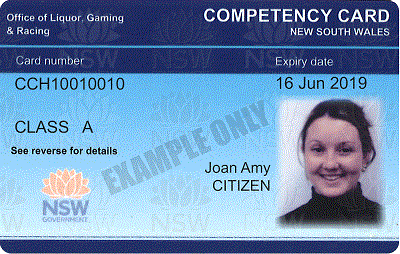
You can request a replacement from the RTO that delivered your training. Most providers keep records of completed qualifications and can reissue your Statement of Attainment, sometimes for a small admin fee. In NSW, if you’ve also lost your Competency Card, you’ll need to contact Liquor & Gaming NSW directly to arrange a replacement. It’s worth keeping a digital copy of your certificate somewhere easy to find.
RSA covers the responsible service of alcohol and applies to anyone selling or serving drinks in a licensed venue. RSG stands for Responsible Service of Gambling and is a separate certification required at venues with gaming machines.
The two aren’t interchangeable. If you work at a pub or club that offers both, you may need both qualifications. Always check the specific requirements of your venue before you start.
In some states, yes. Alcohol delivery has grown a lot in recent years, and licensing requirements for delivery workers are catching up. NSW, for example, has specific RSA requirements for some alcohol delivery roles.
The rules vary by state and by the type of licence held by the business you’re working for. Check with your employer and your state’s liquor authority before assuming your standard RSA covers a delivery role.
They’re real and they move fast. Individual workers can face on-the-spot fines for serving alcohol without a valid certificate. Venues face significantly higher penalties, and repeated breaches can put a liquor licence at serious risk.
In NSW, fines for venue operators can run into the thousands per breach. The cost of getting certified is a fraction of what a single fine looks like, so there’s no good argument for skipping it.
A USI, or Unique Student Identifier, is a personal reference number that tracks your nationally recognised training records in one place. It’s a government requirement, and most RTOs can’t issue your Statement of Attainment without one.
Creating a USI is free and takes about five minutes at usi.gov.au. It also means your RSA record stays linked to your training history long term, which makes it easier to access if you ever need proof of certification down the track.