
White Card Requirements: What You Need to Know
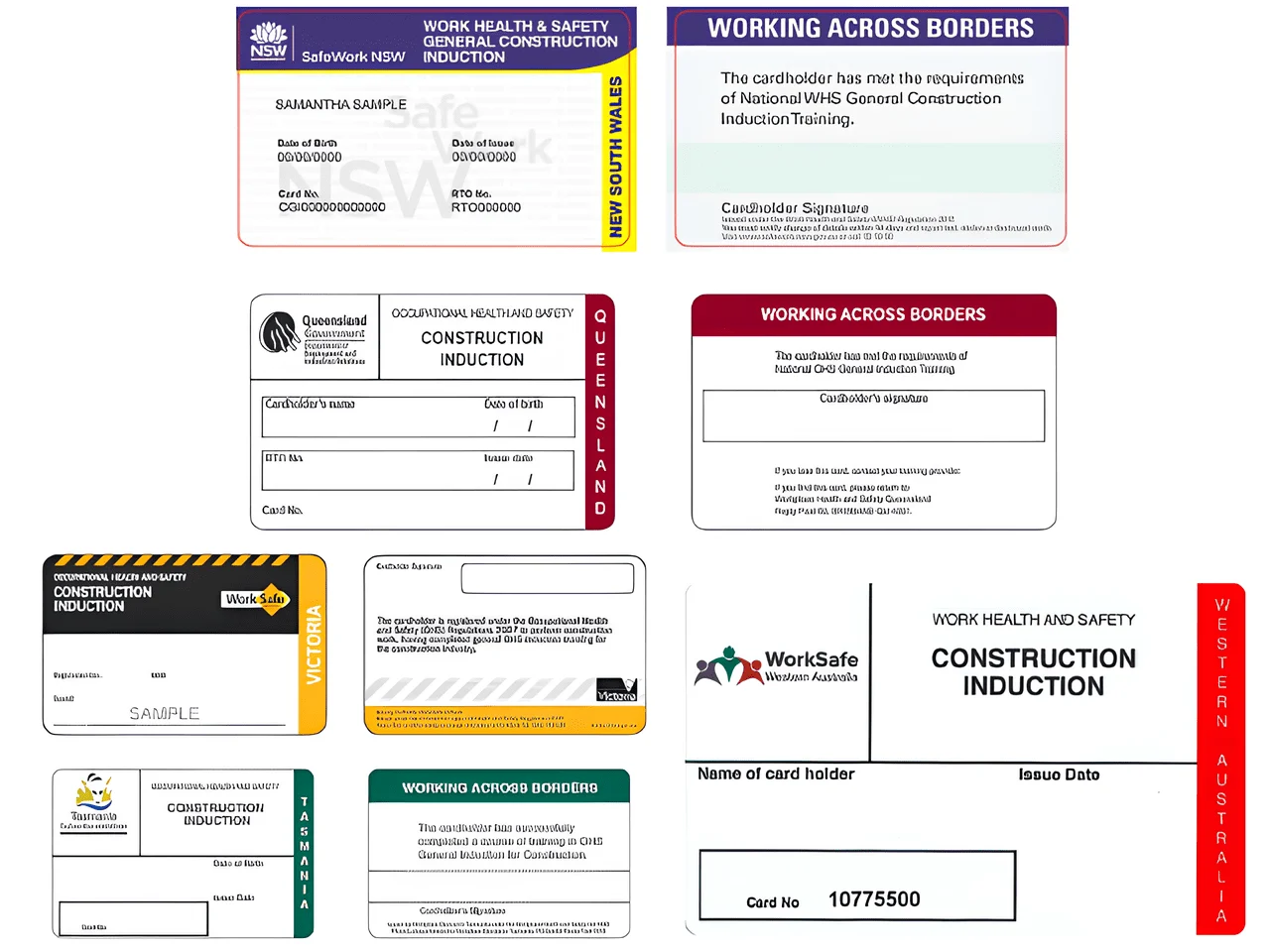
Before you set foot on any active construction site in Australia, there’s one document you need above all else: a White Card. It’s not a trade qualification or a licence, and it’s not optional. It’s a qualification every worker in construction has to have in Australia.


In Short
- A White Card is the required certificate for working on or managing construction activities, or having regular access to construction sites in Australia.
- As of 2026, Australia’s construction industry employs around 1.4 million people, making it one of the nation’s largest industries.
- To get a White Card, you need to complete the CPCCWHS1001 ‘Prepare to Work Safely in the Construction Industry’ unit from a recognised Training Organisation (RTO) approved by your state or territory’s workplace safety authority.
- You can take online White Card training courses available in different states, offered by a government-approved provider such as National Online Courses.
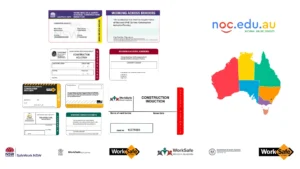
Officially called the General Construction Induction Card, the White Card proves you’ve done the required training under CPCCWHS1001 (Prepare to Work Safely in the Construction Industry).
It doesn’t matter your job, your years on the job, or who you work for. If you don’t have a White Card, you won’t be allowed on the site. It’s simple as that.
This guide covers everything you need to know about getting your White Card. Who needs one, what the training involves, the ID you’ll need to enrol, how the rules differ by state, and what to do if you lose your card or someone questions it on site.

Who Exactly Needs a White Card in Australia?
Requirements for holding a White Card go beyond tradespeople and labourers. If you undertake construction work or frequently visit active construction sites as part of your job, you need to hold a White Card.
What Jobs Require a White Card?
The following workers must have a current White Card to legally access active construction sites in Australia:
- Carpenters, concreters, bricklayers, tilers, painters and all other trade workers
- Electricians, plumbers, gas fitters and other qualified tradespeople working on construction sites
- Workers involved in demolitions, setting up scaffolding, operating cranes and rigging equipment
- Site managers, Project Managers and Site Supervisors
- Engineers, Surveys and Buildings Inspectors who regularly go to Active Sites
- Architects & Designers visiting Construction Sites during different stages of building works
- Labour Hire Employees and Subcontractors working at any level of the construction project hierarchy
- Delivery drivers who access active construction zones regularly as part of their duties.
Who Does Not Need a White Card
Not everyone on a construction site needs a White Card. If you’re a client doing a one-off visit to check on a build, and you’re being supervised the whole time by someone who holds a valid card, you’re generally fine. Same goes for brief, escorted visits are fine as long as the site has confirmed it’s safe for you to be there.
Government inspectors and assessors operating under statutory powers may also be covered by separate rules, though this can vary by state. It’s worth double-checking with the relevant regulator in your state if this applies to you. That said, if you’re regularly on construction sites as part of your job, whether in a supervisory role, doing multiple visits, or anything work-related, you need a White Card.
If there’s any chance you’ll end up on site, just get the card sorted before someone asks.

What Are the White Card Requirements to Get Certified?
Getting a White Card involves meeting some simple requirements; we’ve outlined below what you’ll need to be eligible to sign up for and complete the training.
Age Requirement
The age requirements to get a White Card depend on the state.
In New South Wales, you need to be at least 14. That’s a hard SafeWork NSW rule, with no exceptions. Victoria also sets the minimum at 14 years old.
Queensland is more flexible. WorkSafe QLD doesn’t set an official minimum age, so some RTOs will take students from 13. That being said, check with the RTO directly before booking. WA has no statutory minimum either. Individual RTOs set their own age rules, so again, check before you book.
One thing worth knowing for Queensland specifically: even if you’re old enough to get a White Card, the minimum age to actually do building work on a construction site is 15.
Age isn’t a barrier on the other end either. Plenty of people in their 50s, 60s and older do the course and walk out with the same nationally recognised qualification as everyone else.
If you’re enrolling a teenager through a school-based apprenticeship or vocational placement, check your state’s on-site work age rules before the placement starts.

Proof of Identity
You’ll need to show ID before you can get your White Card. What you bring depends on your state, so check this before you show up on training day.
- NSW has the strictest rules. You need 100 points of ID in original form. That usually means a combination of documents like your passport or birth certificate, driver’s licence, Medicare card, and a bank statement.
- QLD works differently. You need to bring 3 forms of ID, and at least one needs to show your photo. Your documents need to come from two categories: Category A covers things like your passport, driver’s licence, birth certificate, or citizenship certificate. Category B covers things like your Medicare card, bank card, or a student ID with a photo on it.
- VIC, WA, SA, TAS and ACT are simpler. A valid government-issued photo ID like your driver’s licence or passport will usually do the job.
No matter what state you’re in, all documents need to be current, original, and in your name exactly as it appears in your USI account. Note that the RTO won’t accept photocopies or screenshots.

Your Unique Student Identifier (USI)
Your USI (Unique Student Identifier) is a free 10-character code that keeps a record of all your formal training in Australia. You need one before you can get your White Card certificate.
Getting one takes about 5 minutes at usi.gov.au. Just have an Australian ID handy, like your driver’s licence or passport. Sort it out before your training day. Your RTO can’t issue your certificate without it, and it’s one less thing to deal with on the morning of the course.
Personal Protective Equipment (PPE)
If you’re doing your White Card course online, you’ll need your own PPE ready to wear during the practical part of the class. This applies in NSW, QLD, WA, and Tasmania. You will need a hard hat, high-vis vest, safety glasses, and hearing protection. Check with your RTO before the day to confirm exactly what they want to see.
VIC and SA don’t allow online delivery, so if you’re in either of those states you’ll train in a classroom where PPE is usually provided on the day.
Language, Literacy and Numeracy Requirements
You need a basic level of English to do the White Card course. All the training materials, instructions, and assessments are in English, so you need to be able to read, follow along, and write simple answers.
You need to be comfortable enough to understand what the trainer is saying and fill out the assessment on the day. If English is your second language, a face-to-face class is usually easier than doing it online.
Just know that the actual assessment has to be done in English no matter what, so make sure you’re comfortable with that before you book.
How Long Does the Course Take?
The White Card course runs for about 6 to 7 hours and gets done in a single day in most states. Pass the assessment and your RTO hands you a Statement of Attainment on the spot. That’s what gets you through the gates until your physical card shows up in the mail, which usually takes 7 to 14 business days depending on your state.
Tasmania works a bit differently. Once you have your Statement of Attainment, you need to take it to a Service Tasmania service centre within 60 days to apply for the card.
How Long Does a White Card Stay Valid?
Your White Card does not expire. As long as you’re working in construction, it stays valid. There is no renewal and no annual fees. Get it once and it’s yours for as long as you’re on the tools.
The only thing that can void it is stepping away from construction work for more than 2 years in a row. Stay active in the industry and you’ll never need to worry about it.
The Two-Year Rule
Your White Card doesn’t expire, but there’s one rule worth knowing about. If you leave construction for two or more years in a row, most state regulators will treat your card as inactive. That means you must redo the course before getting back on site.
The reason makes sense. Safety laws and on-site practices change over time, and someone coming back after a long break might not be across the current rules. The two-year rule is basically there to make sure everyone on site knows what they’re doing, not just what they knew years ago.
What Counts as Staying Active
You don’t need to work full-time to keep your card valid. Part-time work, supervisory roles, and even occasional site visits all count. As long as you haven’t been completely out of the industry for two consecutive years, you’re fine.
Not sure if your card’s still valid? Just call your state regulator or check with your employer. Some will accept a statutory declaration showing you’ve had recent involvement in the industry.
Others might ask you to redo the course regardless, so it’s worth checking before you turn up on site.

How to Get Your White Card Online in NSW, QLD, WA, or Tasmania
If you’re in NSW, QLD, WA, or Tasmania, you can do your White Card course online. You do not need to travel to a training centre. You study from home and get the same nationally recognised qualification at the end of it.
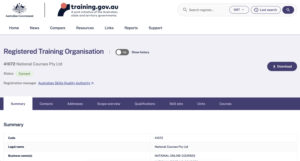
Just make sure you pick the right provider. There are two things to check before you book anything. First, confirm they’re a registered training organisation (RTO) with an active listing on training.gov.au and that CPCCWHS1001 is included in their scope. Second, check that your state’s workplace safety authority has approved them to deliver online training specifically. Being a legit RTO nationally doesn’t automatically mean they’re allowed to run online courses in your state.
One thing worth knowing: self-paced, pre-recorded courses are not accepted anywhere in Australia. NSW and QLD require a live virtual classroom with a real trainer running the session in real time. WA and Tasmania are more flexible and allow fully self-paced online courses, but always confirm with your RTO what format they use.
National White Card Courses (RTO 41072) is approved to deliver online White Card training to people in NSW, QLD, WA, and Tasmania. There are sessions available throughout the week, including evenings and weekends.
In NSW, the online course costs $125 and comes with a best price guarantee. Pass the assessment and you’ll get your Statement of Attainment on the same day.
Ready to Get Your White Card?
Explore NOC’s online White Card training and choose your state to see available sessions and entry requirements.
National Online Courses · RTO 41072.
Need a hand choosing? Call 1300 512 501.